![Yard[D]og](https://blogger.googleusercontent.com/img/b/R29vZ2xl/AVvXsEgsG8qjmycUU0ste7aLskPdOst9gij79rdJVGP-K13VWz_G7WMrDv1mspWA1G46fIGkHHOGjdks8pOp1VyhwpTTKCHFahZqTeEZkc0pVH-VmdmvHBKDteSs3rOCsCI02CyG4ZKxSQHMqs4/s1600/headlinersimpleblog.jpg)
My goofy friend David once told me that he would only vote for a politician he knew personally. Saying that may have been his reaction to my attempts to sway his natural inclination toward conservative politics … to circumventing that aspect of our conversations.
Perhaps good form or a long time friendship kept me from challenging this odd concept … after all politicians; of all stripes affect our lives. It seems silly, almost un-American to automatically disenfranchise yourself ninety-nine percent of the time.
But the actual idea itself is interesting. And so I have it in my mind to keep my musings to subjects and people I know; not in an ethereal context but in a real physical way, while not losing touch with the larger moral issues of my day.
Yard[D]og maybe reached HERE.
Sunday, September 9, 2007


Saturday, September 8, 2007
THE ROVE I KNEW

It’s funny how people come into your life. If you live long enough and pay attention to the w
Louie was gay; nothing unusual about that. He had retired to
His compact back yard had the obligat
And it was by the pool in the shade of the patio, on the flo
All of this is not to say I viewed him as a perfect man; I thought he drank and smoked too much, was temperamental and never watched his diet. He held a grudge beyond reason and could be insulting … we lost touch because of his drinking. I just did not know what to do with people I might call moody drunks. But f
And then on a Sunday brunch with the guys at Cedar Creek on Palm Canyon
His son -- all I knew about his kids was what Louie told me as I looked at their pictures in the living room. He had adopted them. Other than that I was mostly bothered by their visits to
As I watched the news this week I saw a “Rove” standing beside the President, his voice cracking, talking about his love f
Oh My God! Louie Rove; Karl Rove.
I started to wonder then if the son ever cried for the man who raised him and watched him grow up as he did for President Bush. Would Karl talk about his gay father, with the emotion he was showing then? I told a
He replied that the service was private. I can respect a family’s intentions but it is so typical for families who want to "hide" a person’s sexual orientation to keep a funeral private, away from long-time friends. Gay deaths are cluttered with "private" family services.
There is a part of me that wonders why Karl did NOT "distance himself from his father.” Instead such things are reported like Karl having a picture of his father in his White House office; that they were “close”.
Were they close as you or I might think "close" is? I do not nor can I claim to know. But Louie was gay; people knew it; his son knew it. And as Louie was dying in
My question is: How could a son do such a thing, and call it love – either of his father, or of his country?
Luciano ~ the great one...
BREAKING NEWS Updated: 26 minutes ago
ROME - Luciano Pavarotti, whose vibrant high C’s and ebullient showmanship made him one of the world’s most beloved tenors, has died, his manager told The Associated Press. He was 71.
This was the greatest tenor in my life ...here he sings the short, Nessun Dorma. IF YOU HAVE NEVER HEARD OPERA OR THINK YOU DON'T LIKE IT, just listen to this 3.5 minutes and be changed forever. Period.
Monday, May 21, 2007
DIRT AND DUST - US Rep. Broun

U.S. Rep. Paul Broun says an amendment to the U.S. Constitution is needed to protect heterosexual marriage from ‘activist judges.
Read all you can about this man. We wonder when these kind of people will once and for all just fade away. Will it take another 20 years before the bigots of this world find another target for these sickness?
Another Into The Dust Bin of History Award winner ... Rep. Droun!
Saturday, March 17, 2007
Houseless in 2008
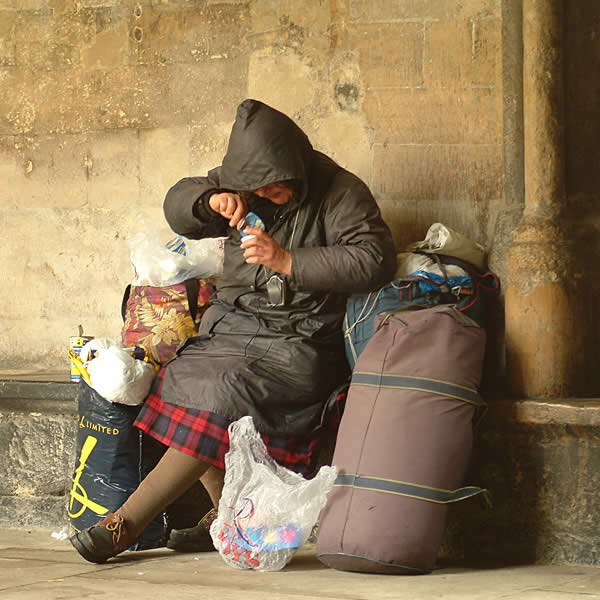
This town of mine has always cared about the homeless. I feel I can say that with confidence after 35 years of working with volunteers, donors, and our faith communities who help the homeless daily.
I’ve talked about the city’s homeless with congressmen, City managers, police chiefs, mayors and at rotary, Church groups, at the country Club, the Town and Country. I’ve gone anywhere people would listen. And my listeners all care a lot about a problem that is now more than 40 years old and not much has changed.
Despite all of our conversations, one remark by one resident John Rasmussen sticks in my mind. Short, red-headed and always carrying a walking stick, John, who slept next to the heating vents at the main library in the winter said to me, “Frank, I’m not homeless, I’m houseless.”
Despite all of our conversations, one remark by a Pasadena resident John Rasmussen sticks in my mind. Short, red-headed and always carrying a walking stick, John, who slept next to the heating vents at the main library in the winter said to me, “Frank, I’m not homeless, I’m houseless.”
John’s words came back to me at this month’s meeting of the community Coalition. The Coalition’s members represent our faith-based non-profits and churches with the primary aim to assist the homeless. In the middle of that meeting I heard an Executive Director say his agency was applying for a “Housing First” grant.
“Stop,” I said. “What does ‘Housing First’ mean?”
“It’s an approach to ending homelessness that is centered on getting homeless people into permanent housing and THEN providing then with services.” he replied.
That stunned me. The philosophy I worked within emphasized emergency and transition housing and supportive services first -- a kind of education model. If you worked your way though the “lower” levels, a service provider would then find housing. The Housing First strategy stresses finding permanent housing quickly and providing services if and when they are needed.
Shortly after the 1994 Northridge Earthquake, various social service groups and government agencies set up emergency centers to assist displaced persons. When John heard that he went to Northridge. He came back and told me, “They didn’t help me because I was ‘really’ homeless.” That is about the closest I’ve heard of a similar program, but John was not its target population.
The National Alliance to End Homelessness coordinates a network of agencies dedicated to the Housing First concept. There are several critical elements:
• Focus on helping individuals and families access and sustain permanent rental housing as quickly as possible;
• Services are delivered primarily following a housing placement to promote housing stability and individual well-being. Such services are time-limited or long-term, depending upon individual need; and
• Housing is not contingent on compliance with services. Instead, participants must comply with a standard lease agreement and are provided with the services and supports that are necessary to help them do so successfully.
While Housing First programs share these common elements, new emerging program models vary significantly depending upon the population served, says the Alliance.
I used to have an old saying, “If you were homeless for one month, it took year to ‘get over it’; if you were homeless for a year, it took five years; if you were homeless for five years you were homeless for a lifetime. But most folks are only homeless for a month or two.”
Unless they were too sick to comprehend it, I never meet a homeless person that did not want housing. And not housing in a church basement, housing that separated families, housing in a downtown Los Angeles mission, housing that can not accept men and/or teenage boys, housing that puts two families in a single room with everyone in bunk beds … or housing in jail.
Most people, especially families, are homeless due to a personal crisis and are not chronically homeless like John for whom emergency shelters would have been a life-long reality. But our system of care that developed as an honest attempt to address a social phenomenon 40 years ago, has failed to address the basic underlying issue: the availability of permanent, affordable housing.
John had it right all those years ago, he wasn’t homeless, he was houseless. That is where our caring energy should focus today.
Subscribe to:
Posts (Atom)
